
Stand at your hearth on a cold January night and feel for a draft: if you find one, you're feeling your damper — or what's left of it. The traditional cast-iron throat damper warps, rusts and racks out of alignment over the years, and even a good one seals metal-to-metal, which is to say barely at all. Heated air escapes up the flue all winter; cold air, odors and animals come down it.
Eagle Chimney MN repairs and replaces chimney dampers across the Twin Cities, including top-sealing dampers that fix the problem at the flue's exit instead of its entrance.
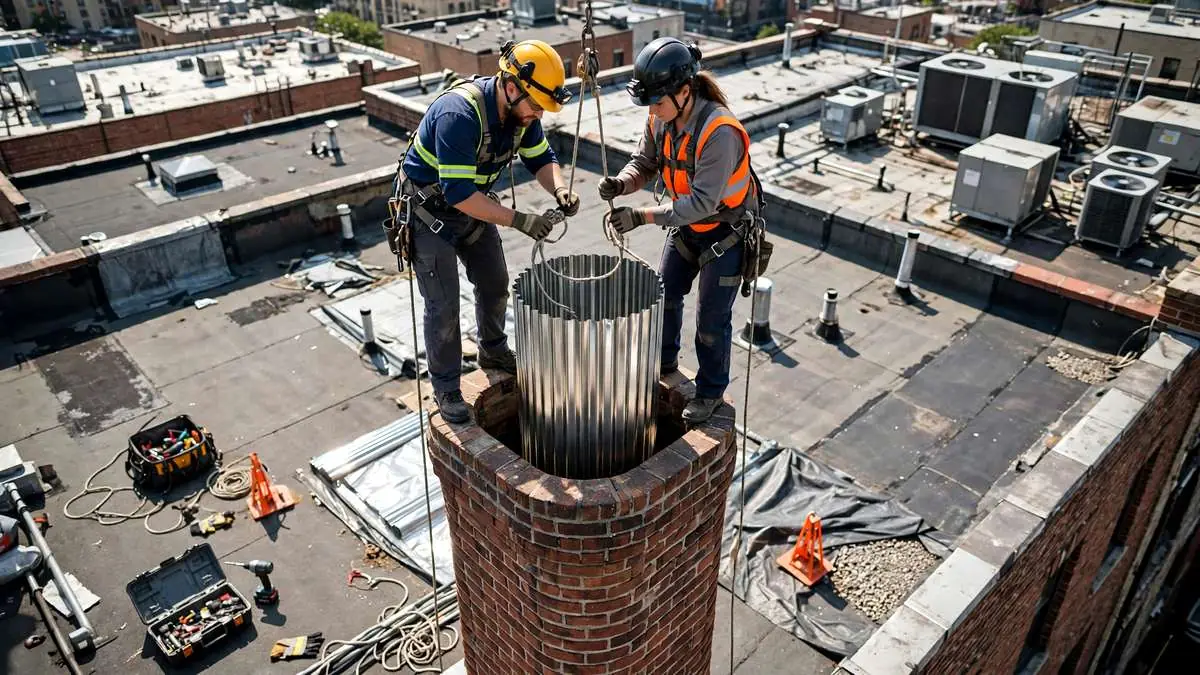
Throat Dampers vs. Top-Sealing Dampers
A throat damper sits just above the firebox. When it works, it works adequately; when it's warped or rusted, repairs range from handle and cable work to full replacement of a part that will never seal perfectly. A top-sealing damper mounts at the very top of the flue and closes against a silicone rubber gasket, operated by a cable that runs down to the firebox. The seal is dramatically tighter, the flue stays warmer and drier between fires, and the closed damper also functions as a cap — keeping out rain and animals. Brands we install include Lock-Top and Lyemance.
Signs Your Damper Needs Service
- A cold draft at the hearth when no fire is burning
- A damper handle that's stuck, broken or spins without effect
- Visible rust, warping or daylight around the damper plate
- Smoke spilling into the room when you light a fire
- Campfire odors in the house on humid summer days
- Debris or animal sounds above the damper
What We Do
We start by identifying what you have and whether it's honestly repairable. Handle, cable and linkage repairs are quick wins when the plate itself is sound. A warped or rusted-out plate usually makes a top-sealing damper the smarter spend: one installation solves the seal, the draft and the cap in a single part. Either way, we test the result with you — open, closed, and a fire lit — before we call it done.